

The nerves to your arm pass through a narrow doorway, and posture decides how wide it stays.
The thoracic outlet is the space between your collarbone and first rib, where the nerves and blood vessels that feed the arm travel out from the neck. When the surrounding muscles tighten, the shoulders round forward, or the first rib sits high, that doorway narrows and the structures passing through it get compressed.
What people often label as a pinched nerve or a circulation problem is usually a mechanical crowding issue. The scalene muscles, the pec minor, and the position of the shoulder girdle each play a role, and each one responds to specific treatment that produces specific results.
Thoracic outlet syndrome travels down the arm.
Because the nerves and vessels affected supply the whole arm, symptoms can show up anywhere from the neck to the fingertips, and they often change with arm position.
Arm Numbness
Numbness running down the inside of the arm and into the ring and little fingers, often worse when reaching overhead.
Hand Tingling
Pins and needles in the hand and fingers that flare with carrying bags, driving, or holding the phone to your ear.
Grip Weakness
A weakening grip and clumsiness with fine tasks, sometimes with noticeable fatigue when the arm is raised.
Aching at the Collarbone
A deep ache around the collarbone and front of the shoulder that spreads into the neck after activity.
Color and Temperature Changes
The hand may feel cold, look pale, or change color when the arm is held up, a sign the blood vessels are involved.
Symptoms That Shift With Position
Pain and tingling that ease when you lower the arm and return the moment you reach up or carry something heavy.
Open the space, calm the nerve, retrain the posture.
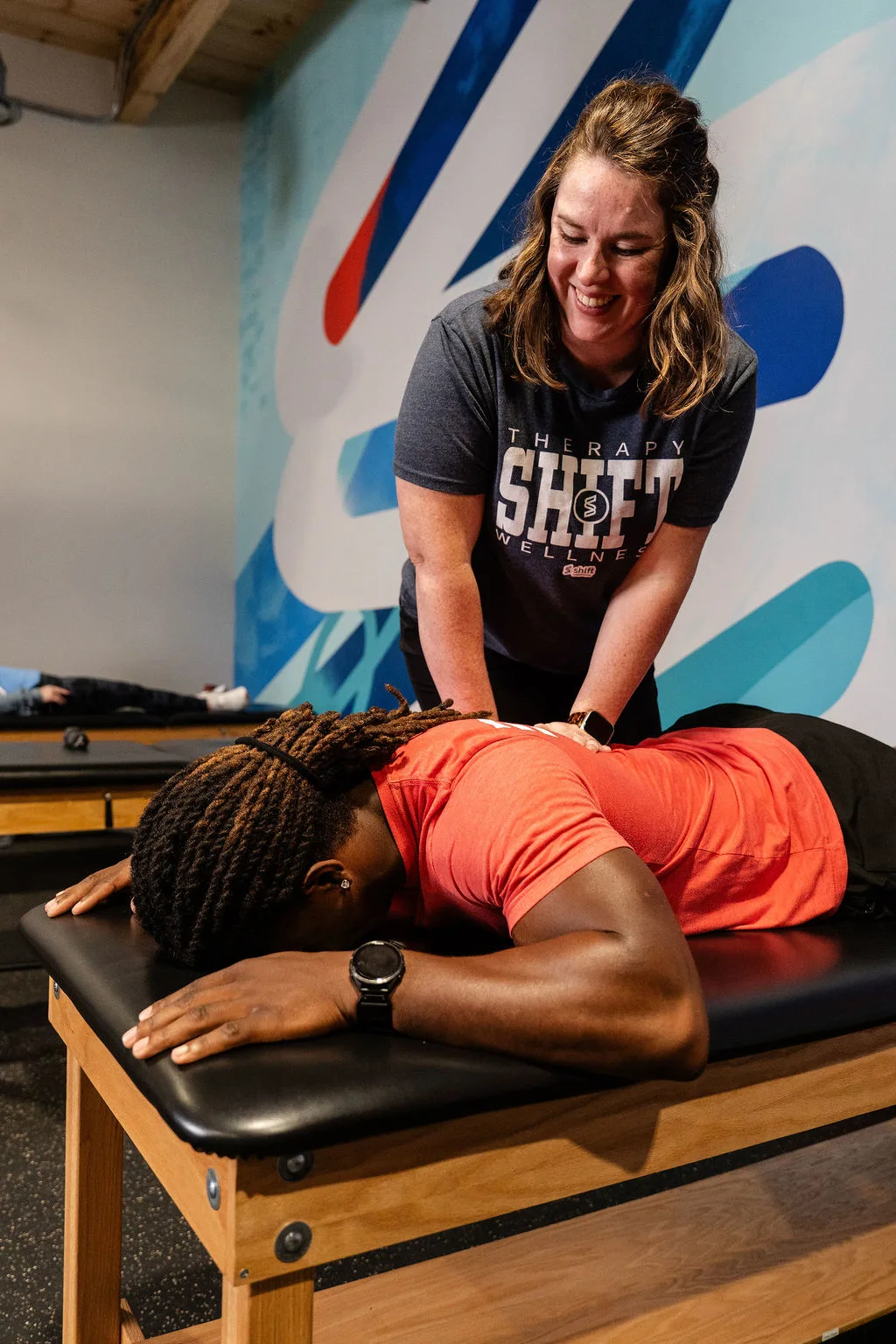
Treatment at Shift Therapy & Wellness begins by finding exactly where the compression is happening. Hands-on release of the scalenes and pec minor, along with mobilization of the first rib and collarbone, restores room for the nerves and vessels and often eases symptoms quickly.
From there we rebuild the postural support the shoulder girdle has lost, gently glide the nerve to restore its mobility, and retrain the breathing and movement habits that crowded the outlet in the first place. You leave with a clear program and the understanding to keep that doorway open.
No referral needed. Most insurances accepted. In most cases, you can be seen within the same week.
What our patients say.
"Great facility with great people. They were understanding and supportive throughout my whole treatment. Highly recommend."Medina S. · Verified Google Review